
Install the app
How to install the app on iOS
Follow along with the video below to see how to install our site as a web app on your home screen.
Nota: This feature may not be available in some browsers.
Estás usando un navegador obsoleto. No se pueden mostrar este u otros sitios web correctamente.
Se debe actualizar o usar un navegador alternativo.
Se debe actualizar o usar un navegador alternativo.
Noticias Ant Group’s Profit Plunges 79% on AI and Health Care Spending
- Autor Only Traders Fans
- Fecha de inicio
Back to Noticias
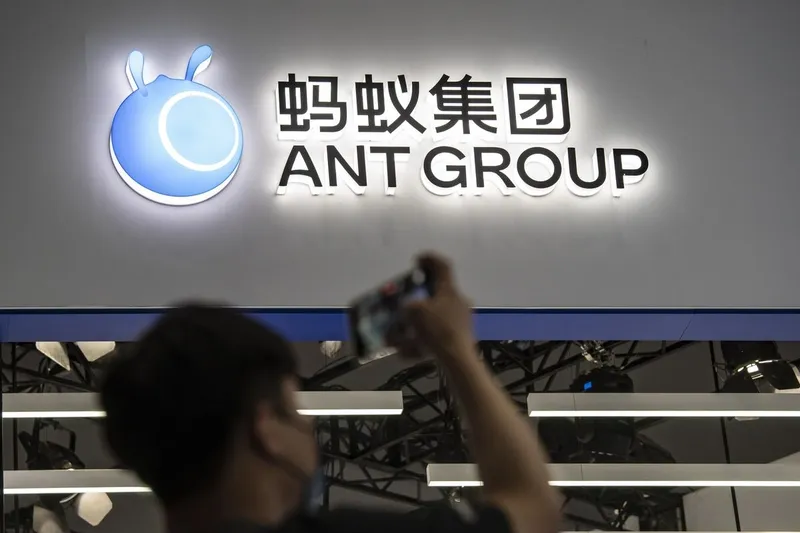
Ant Group Co., the fintech giant backed by Jack Ma, reported a sharp 79% drop in quarterly profit for the period ending September 2023. This decline comes as the company significantly ramps up spending on artificial intelligence (AI), particularly in health care, large language models (LLMs), and payment services.
The financial results, disclosed in a filing by its major shareholder Alibaba Group Holding Ltd., show that Ant Group’s profit attributable to equity holders fell to approximately $780 million (RMB 5.6 billion) in the quarter. This is a massive drop from the $3.7 billion (RMB 26.7 billion) recorded in the same period last year. The figures are based on Ant’s 33% stake in the company, as Alibaba does not consolidate its earnings.
The main driver behind this profit slump is Ant’s aggressive investment in AI technologies. The company is pouring resources into developing its own large language model, similar to OpenAI’s GPT, and integrating AI into its core products like Alipay. These investments include:
- Health care AI: Ant is developing AI-powered diagnostic tools and medical imaging systems to tap into China’s aging population and growing demand for digital health services.
- Large language models: The company is building a foundation model for natural language processing, which could power chatbots, customer service, and content generation across its platform.
- Payment services: AI is being used to enhance fraud detection, personalize financial recommendations, and optimize payment processing for over 1 billion users.
Additionally, Ant is facing higher operational costs due to regulatory pressures. Since 2020, the company has been under a major restructuring ordered by Chinese regulators, which forced it to transform from a financial holding company into a more regulated entity. This has led to increased compliance costs and a shift away from high-margin lending businesses.
Ant Group’s business has historically relied on two main pillars: payment services (Alipay) and micro-loans (Huabei and Jiebei). However, the regulatory crackdown has limited its ability to leverage consumer data for lending, forcing the company to diversify.
The AI push is part of Ant’s strategy to diversify beyond financial services. The company is betting that AI can help it compete in new sectors like health care, where it can offer AI-driven diagnostics and telemedicine. It is also investing in AI for enterprise services, such as supply chain management and cloud computing.
The profit drop was widely expected by analysts, as Ant has been signaling a shift toward long-term investment over short-term profitability. Shares of Alibaba, which holds a 33% stake in Ant, reacted mildly to the news, with a 0.5% decline in Hong Kong trading.
Looking ahead, Ant Group faces several challenges:
- Regulatory uncertainty: The Chinese government continues to tighten rules on fintech companies, including data privacy and anti-monopoly laws.
- Competition: Rivals like Tencent’s WeChat Pay and ByteDance’s Douyin Pay are also investing heavily in AI, creating a crowded market.
- Profitability timeline: AI investments are capital-intensive and may take years to generate returns, putting pressure on Ant’s bottom line.
However, Ant’s strong cash reserves and user base of over 1 billion give it a solid foundation. The company has also been expanding internationally, particularly in Southeast Asia, where it offers cross-border payment solutions.
For $BABA shareholders, the profit drop is a reminder of the high costs of transitioning to an AI-first business model. For Ant Group users, the changes may lead to improved services, such as faster payment processing and more accurate health recommendations.
In summary, Ant Group is in a period of transformation, prioritizing technology over immediate profits. While the short-term numbers look grim, the company is betting that AI will be the key to its future growth. Whether this strategy pays off remains to be seen, but for now, investors should brace for continued volatility in the stock.
Note: This analysis is based on publicly available data and should not be considered financial advice. Always do your own research before making investment decisions.

Ant Group’s Profit Plunges 79% on AI and Health Care Spending
Ant Group Co., the fintech giant backed by Jack Ma, reported a sharp 79% drop in quarterly profit for the period ending September 2023. This decline comes as the company significantly ramps up spending on artificial intelligence (AI), particularly in health care, large language models (LLMs), and payment services.
The financial results, disclosed in a filing by its major shareholder Alibaba Group Holding Ltd., show that Ant Group’s profit attributable to equity holders fell to approximately $780 million (RMB 5.6 billion) in the quarter. This is a massive drop from the $3.7 billion (RMB 26.7 billion) recorded in the same period last year. The figures are based on Ant’s 33% stake in the company, as Alibaba does not consolidate its earnings.
Why the Profit Decline?
The main driver behind this profit slump is Ant’s aggressive investment in AI technologies. The company is pouring resources into developing its own large language model, similar to OpenAI’s GPT, and integrating AI into its core products like Alipay. These investments include:
- Health care AI: Ant is developing AI-powered diagnostic tools and medical imaging systems to tap into China’s aging population and growing demand for digital health services.
- Large language models: The company is building a foundation model for natural language processing, which could power chatbots, customer service, and content generation across its platform.
- Payment services: AI is being used to enhance fraud detection, personalize financial recommendations, and optimize payment processing for over 1 billion users.
Additionally, Ant is facing higher operational costs due to regulatory pressures. Since 2020, the company has been under a major restructuring ordered by Chinese regulators, which forced it to transform from a financial holding company into a more regulated entity. This has led to increased compliance costs and a shift away from high-margin lending businesses.
Impact on Ant Group’s Business Model
Ant Group’s business has historically relied on two main pillars: payment services (Alipay) and micro-loans (Huabei and Jiebei). However, the regulatory crackdown has limited its ability to leverage consumer data for lending, forcing the company to diversify.
The AI push is part of Ant’s strategy to diversify beyond financial services. The company is betting that AI can help it compete in new sectors like health care, where it can offer AI-driven diagnostics and telemedicine. It is also investing in AI for enterprise services, such as supply chain management and cloud computing.
- Health care: Ant has partnered with hospitals to develop AI for medical imaging, drug discovery, and patient monitoring.
- Large language models: The company launched its own LLM called “AntGLM” in 2023, aiming to compete with Baidu’s ERNIE and Alibaba’s Tongyi Qianwen.
- Payment: AI is being used to improve user experience, such as real-time translation for cross-border payments and personalized merchant recommendations.
Market Reaction and Future Outlook
The profit drop was widely expected by analysts, as Ant has been signaling a shift toward long-term investment over short-term profitability. Shares of Alibaba, which holds a 33% stake in Ant, reacted mildly to the news, with a 0.5% decline in Hong Kong trading.
Looking ahead, Ant Group faces several challenges:
- Regulatory uncertainty: The Chinese government continues to tighten rules on fintech companies, including data privacy and anti-monopoly laws.
- Competition: Rivals like Tencent’s WeChat Pay and ByteDance’s Douyin Pay are also investing heavily in AI, creating a crowded market.
- Profitability timeline: AI investments are capital-intensive and may take years to generate returns, putting pressure on Ant’s bottom line.
However, Ant’s strong cash reserves and user base of over 1 billion give it a solid foundation. The company has also been expanding internationally, particularly in Southeast Asia, where it offers cross-border payment solutions.
Key Takeaways for Investors and Users
For $BABA shareholders, the profit drop is a reminder of the high costs of transitioning to an AI-first business model. For Ant Group users, the changes may lead to improved services, such as faster payment processing and more accurate health recommendations.
- Ant’s profit fell 79% due to AI and health care investments.
- The company is shifting from lending to AI-driven services.
- Regulatory costs remain a significant burden.
- Long-term prospects depend on AI monetization.
In summary, Ant Group is in a period of transformation, prioritizing technology over immediate profits. While the short-term numbers look grim, the company is betting that AI will be the key to its future growth. Whether this strategy pays off remains to be seen, but for now, investors should brace for continued volatility in the stock.
Note: This analysis is based on publicly available data and should not be considered financial advice. Always do your own research before making investment decisions.
Sort by:
Best
New
Old
Controversial
Legal Notice
Este contenido tiene fines informativos y educativos únicamente y no debe interpretarse como asesoramiento financiero. Las inversiones en mercados financieros conllevan un alto nivel de riesgo, pudiendo resultar en la pérdida total del capital invertido. Realice su propia investigación exhaustiva antes de tomar cualquier decisión de inversión.
Currently on our website
13 User Active
Temas
1.452
Mensajes
1.459
Miembros
42
Último miembro
danielcuervox
