Introduction
The ongoing geopolitical tensions under Donald Trump’s administration have created unexpected economic opportunities for Iran. Despite U.S. sanctions aimed at crippling Tehran’s oil exports, Iran is finding new ways to generate revenue, with significant assistance from China. This article explores how the Islamic Revolutionary Guard Corps (IRGC) is leveraging the conflict to profit from crude oil sales, using Chinese intermediaries and financial networks to bypass restrictions. The situation highlights the complex interplay between war, sanctions, and global energy markets.
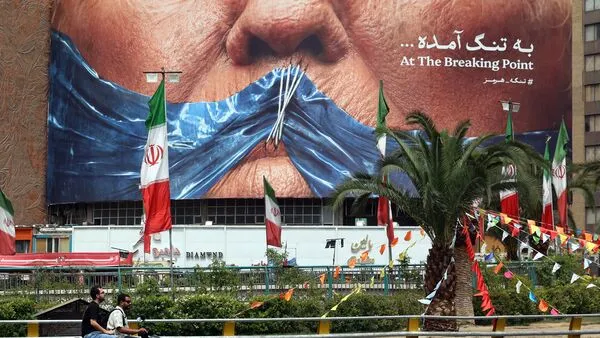
The U.S. crackdown on Iranian oil exports has been a cornerstone of Trump’s “maximum pressure” campaign. However, the conflict in the Middle East, particularly the war between Israel and Iran-backed groups, has disrupted global oil supply chains. This disruption has driven up crude prices, making Iranian oil more attractive to buyers willing to risk sanctions. China, the world’s largest oil importer, has emerged as a key partner, facilitating transactions through shadowy networks.
China’s involvement is not new, but the current war has intensified the flow. The IRGC, which controls much of Iran’s oil smuggling operations, has found a willing partner in Chinese state-owned and private refineries. These refineries process Iranian crude into refined products, often disguising its origin through ship-to-ship transfers and false documentation. The profits flow back to Iran through a complex web of front companies and cryptocurrency exchanges, bypassing U.S. financial sanctions.
The Mechanics of the Trade
The process begins with Iranian oil being loaded onto tankers in the Persian Gulf. These vessels often turn off their transponders to avoid detection, a practice known as “going dark.” They then transfer the crude to smaller ships near Malaysian or Indonesian waters, where it is mixed with other grades. The final product is sold to Chinese buyers as oil from other countries like Iraq or Oman.
China’s independent “teapot” refineries are the primary customers. These small, private facilities are less scrutinized than state-owned giants and are willing to pay a premium for discounted Iranian crude. The IRGC profits from the price difference, which can be as high as $10 per barrel. With Iran exporting up to 1.5 million barrels per day, this generates billions of dollars annually.
The Role of Cryptocurrency
To avoid the U.S. dollar-based financial system, Iran and China have increasingly turned to cryptocurrencies. The IRGC uses Bitcoin and other digital assets to settle payments, often through exchanges in Dubai or Turkey. This method is difficult for U.S. authorities to track, as transactions are decentralized and pseudonymous. China’s state-backed digital yuan is also being tested for cross-border oil payments, further complicating enforcement.
The war has accelerated this trend. As U.S. sanctions tighten, the demand for alternative payment systems grows. Iran’s central bank has even issued licenses for crypto mining operations, using the proceeds to fund imports. The IRGC controls many of these mining farms, which are often located in abandoned factories or military bases.
Impact on Global Markets
The flood of Iranian oil into global markets has both positive and negative effects. On one hand, it helps stabilize prices by increasing supply, especially as the war threatens output from other producers like Russia and Saudi Arabia. On the other hand, it undermines U.S. sanctions and emboldens other sanctioned regimes, such as Venezuela and North Korea.
For the U.S., the situation is a diplomatic headache. Trump’s administration has threatened secondary sanctions against Chinese entities buying Iranian oil, but enforcement is inconsistent. Many Chinese companies simply create new shell companies after being blacklisted, making the crackdown a game of whack-a-mole.
The Future of the Trade
As long as the war continues, Iran’s oil revenues are likely to remain robust. The IRGC has become adept at adapting to sanctions, using new technologies and partnerships to stay ahead. However, the trade is not without risks. A major escalation, such as a direct U.S.-Iran military confrontation, could disrupt the flow. Additionally, any peace deal in the Middle East could reduce oil prices, making Iranian crude less competitive.
For now, China remains the linchpin. Beijing’s strategic need for energy security outweighs its concerns about U.S. sanctions. The relationship between Iran and China is deepening, with recent agreements on infrastructure and military cooperation. This partnership is reshaping the global energy landscape, with the IRGC at the center of a lucrative black market.
In conclusion, the war under Trump has inadvertently boosted Iran’s economy, with China serving as the primary enabler. The implications for global security and energy markets are profound, as sanctions become increasingly difficult to enforce. The world watches as Tehran and Beijing continue to profit from conflict.


